Our partners Armaş Foundation and Flying Broom Women’s Communication and Research Association and many others continue to advocate and stand up for human rights and environmental rights amidst significant restrictions. The participation of civil society is not an additional feature of climate diplomacy. It is a prerequisite for democratic, transparent and rights-based climate governance.
What is COP31, and why does it matter?
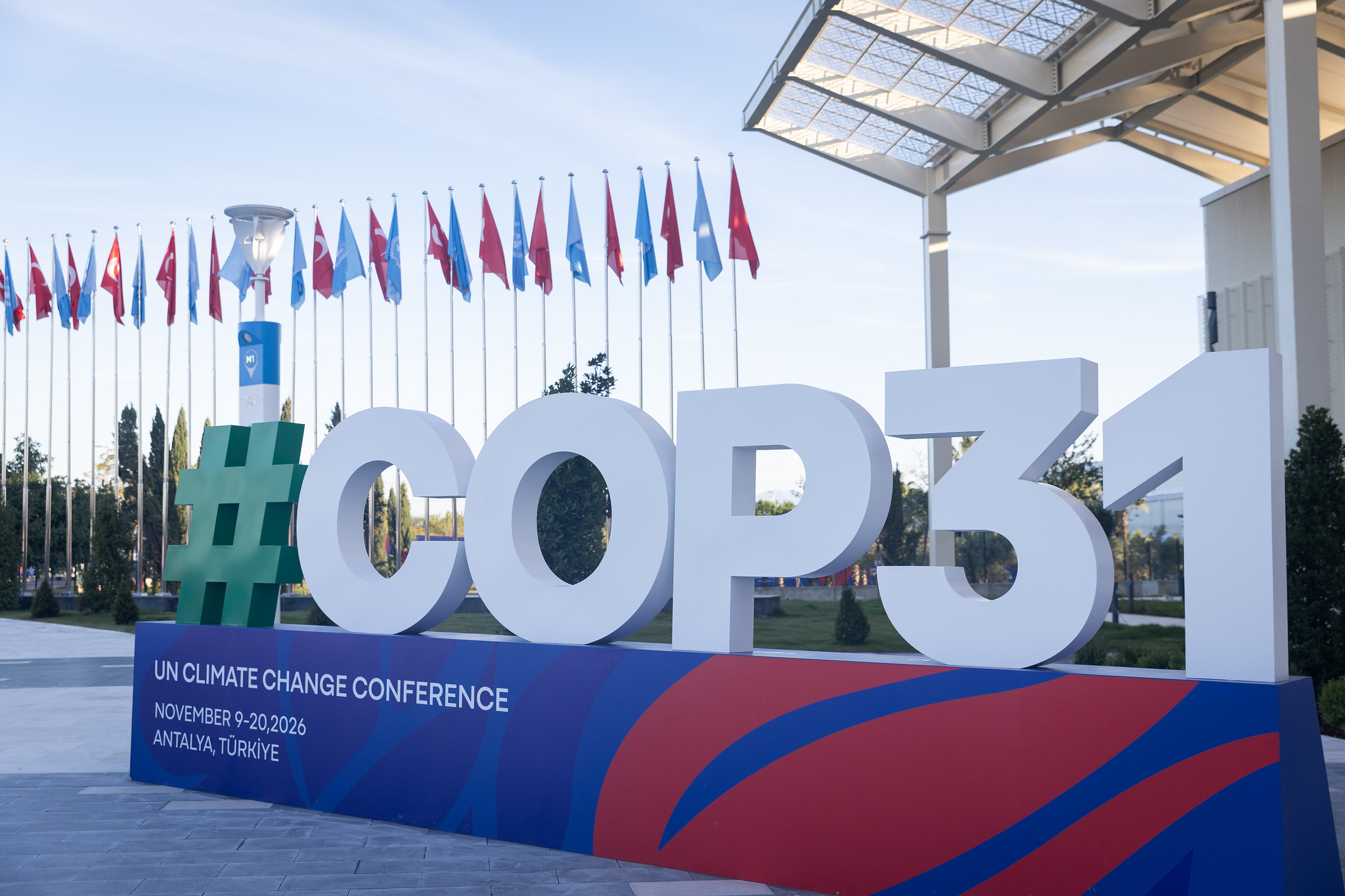
The 31st United Nations Climate Change Conference (COP31) will take place in Antalya, Türkiye, from 9 to 20 November 2026. COP stands for the Conference of the Parties to the United Nations Framework Convention on Climate Change (UNFCCC). It is the annual global forum where governments come together to negotiate and assess collective action on climate change, including emissions reductions, climate adaptation and climate finance. In addition to governments, COPs also bring together scientists, international organisations, businesses and civil society organisations, which makes them an important space for shaping the future of global climate policy.
But climate action cannot be measured solely through emissions targets or financial commitments. At the heart of it must be the protection of fundamental rights, its impact on people’s lives, and the meaningful participation of those most affected by the climate crisis.
Climate change is not experienced equally
The impacts of climate change deepen existing inequalities, disproportionately affecting women and girls, indigenous peoples, rural communities, people with disabilities, low-income households and other marginalised groups. Women, in particular, often face increased risks to their livelihoods, access to food and water, health and safety, while also carrying a disproportionate share of unpaid care work and community-level responses to environmental crises.
Consequently, climate action is fundamentally a human rights issue. Governments have responsibilities not only to reduce emissions and adapt to climate impacts, but also to protect people’s rights to life, health, housing, water, food, a healthy environment, equality and participation in public affairs.
The outcomes of COP30 in Belém are particularly relevant in this regard. The Belém Gender Action Plan (2026–2034) provides a framework for strengthening gender-responsive climate policies and implementation. It recognises the different experiences of women and girls, including Indigenous women, women from local communities, migrant women, women with disabilities and women working in agriculture. It also emphasises the importance of women’s leadership, gender-responsive finance, data and knowledge, capacity-building and meaningful participation.
As Selen Doğan from our partner organisation Flying Broom Women’s Communication and Research Association explains:
“ The climate crisis is a feminist issue; it is not gender-neutral. Women, who are disproportionately affected by climate change, must also play an active role in addressing the crises that accompany it.“
Gender equality commitments must be reflected in actions related to resources, accountability and actual influence over decisions. Climate policies that overlook gender-based violence, unequal access to resources or women’s exclusion from decision-making risk reproducing the very inequalities that make communities more vulnerable to climate change.
Selen Doğan also highlights a fundamental gap between international commitments and their implementation: gender-specific impacts are often insufficiently researched and documented, making it harder for civil society organisations to develop evidence-based advocacy. She argues that COP processes must address the rights of women and girls alongside those of children, persons with disabilities, older people, migrants and other marginalised groups, as well as the protection of biodiversity and cultural heritage.
Her perspective is a reminder that climate justice requires more than technical solutions. It requires inclusive and sustainable advocacy that recognises the interconnectedness of human rights, gender equality and the protection of all forms of life.
Türkiye’s climate commitments and the accountability gap
Hosting COP31 places Türkiye offers an opportunity to demonstrate climate leadership, but also brings greater international scrutiny of the relationship between its climate policies, environmental governance and human rights record.
Türkiye has committed to achieving net-zero emissions by 2053 and submitted an updated Nationally Determined Contribution (NDC) in November 2025, setting a 2035 emissions target. However, independent assessments continue to raise serious concerns about the ambition of these commitments. Climate Action Tracker has rated Türkiye’s 2035 target as critically insufficient, warning that its projected emissions pathway is not aligned with the Paris Agreement’s 1.5°C temperature goal.
Türkiye’s 2025 Climate Law establishes a framework for an emissions trading system. The existence of climate legislation and international commitments, however, does not automatically guarantee a rights-based transition. Questions remain about the continued reliance on fossil fuels, the environmental and social consequences of energy and mining projects, the protection of ecosystems and the extent to which affected communities can influence decisions.
Defending the environment should not put anyone at risk
Environmental challenges Türkiye is facing must be considered alongside the treatment of environmental human rights defenders. Across Türkiye, people opposing mining, fossil fuel projects, deforestation and other environmentally damaging developments have faced arrests, criminal investigations, prosecutions and restrictions on peaceful assembly. The case of Esra Işık, an environmental defender from İkizköy, Muğla, who protested against urgent expropriation linked to coal mining near Akbelen Forest, illustrates these risks. After being detained in March 2026, she was convicted in July of resisting a public official and insulting a public official in connection with her participation in a peaceful protest. She is free while appealing her conviction.
Human Rights Watch has documented a broad pattern of arbitrary arrests and prosecutions connected to environmental protests in the lead-up to COP31. Such practices raise fundamental questions about the protection of freedom of expression, association and peaceful assembly in a country hosting a global climate summit.
The ability of communities to challenge environmental decisions is not separate from climate action. Access to information, environmental justice, effective legal remedies and the freedom to organise are essential conditions for meaningful participation and accountability.
Civil society participation: Who gets to shape climate decisions?
The credibility of COP31 will depend not only on the commitments negotiated inside the conference venue, but also on whether the people and organisations experiencing environmental destruction can participate freely and meaningfully.
For many local organisations in Türkiye, participation in climate decision-making remains difficult. Financial constraints limited institutional capacity, barriers to international accreditation and shrinking civic space all affect their ability to influence policy. Even when organisations gain access to international platforms, visibility does not necessarily translate into meaningful participation in negotiations or decision-making. Gonca Doğan from Armaş Foundation highlights the challenge about meaningful participation, following the Marmara Yanyana meeting with environmental rights actors in Türkiye’s Marmara region, “For the participants, the unfairness was that those most affected by these decisions have no say in them.”
Gina Romero, UN Special Rapporteur on the rights to freedom of peaceful assembly and of association expressed her concern on these issues as well. In a statement shared on LinkedIn ahead of COP31, Romero raised concerns about restrictions on civic space in Türkiye, including the criminalisation and harassment of environmental and other activists, barriers to observer participation and restrictions on civil society advocacy within the conference venue.
She particularly warned that restrictions on demonstrations and advocacy outside designated spaces, including limitations on banners, flags and political slogans, could undermine freedom of expression and peaceful assembly.
Romero emphasised that:
“Multi-stakeholder climate diplomacy requires transparent, unimpeded observer access and procedural integrity. Both the host government and the UN must uphold safety, freedom of expression and assembly, and full inclusion for marginalized groups.”
These concerns are especially critical since environmental organisations, women’s rights groups and local community initiatives are often the actors documenting environmental harm, supporting affected communities and holding decision-makers accountable.
What should COP31 leave behind?
Türkiye has a critical responsibility and an opportunity with COP31. It is important that success is not only measured by the agreements reached, the number of participants or the international visibility of the summit.
It should also be measured by whether Türkiye protects environmental human rights defenders, guarantees freedom of expression and peaceful assembly, strengthens access to environmental information and justice, and creates meaningful opportunities for civil society to participate in climate decision-making.
International climate commitments, including the Belém Gender Action Plan, must translate into action at national and local levels. This means ensuring that women and marginalised communities are not simply recognised as vulnerable groups, but supported as decision-makers, advocates and leaders of climate action.
It also means recognising that environmental defenders are not obstacles to climate policy. They are essential to ensuring that climate policies are accountable, equitable and grounded in the realities of affected communities.
As COP31 brings international attention to Türkiye, the voices of local organisations, women environmental defenders and affected communities must not be confined to the margins of the summit.
A climate transition that restricts fundamental human rights, excludes affected communities and reproduces gender inequalities cannot be a just transition. The interconnectedness and interdependency of all human rights, particularly with gender equality and the protection of all forms of life must be integral to the process.
Ultimately, the measure of COP31 should be not only what governments promise in Antalya, but whether those promises translate into stronger rights, greater accountability and lasting change for the people and communities who will continue to defend their environment long after the summit ends.
The NHC are there
The Norwegian Helsinki Committee will as a member of the International Federation for Human Rights (FIDH) be present at the conference to highlight that human rights must be at the centre of COP31.