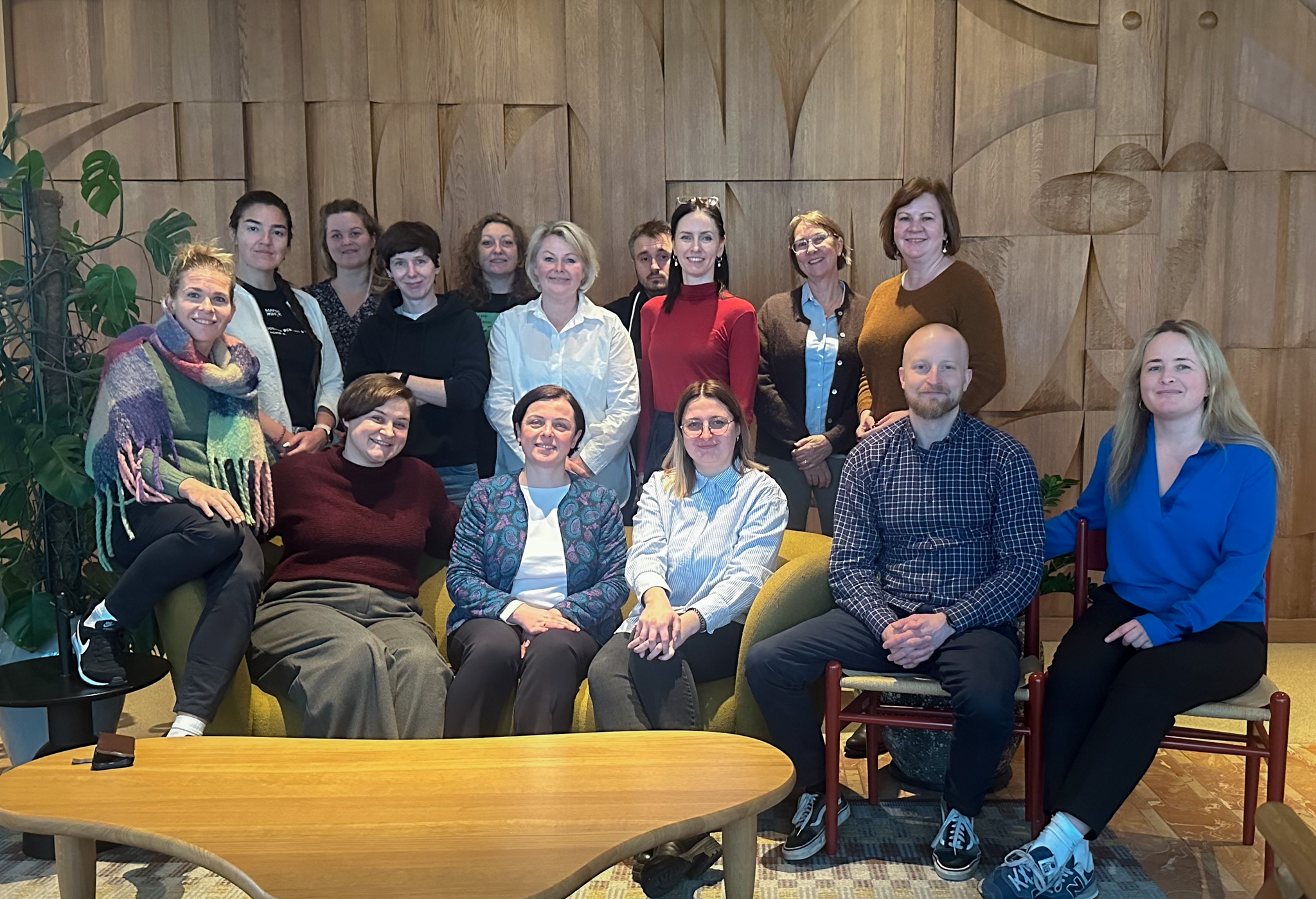
The project is administered by the Norwegian Helsinki Committee, together with the Centre for Civil Liberties and Kyiv Human Rights Hub.
The project runs from January 2025 to December 2027 and is financed by Norway through the Nansen‑programme.
Main components of the Nansen‑project
Small grants for regional civil society organisations
Support for a wide range of local, regional, and national initiatives — covering everything from assistance to veterans with disabilities and internally displaced people, to strengthening local anti‑corruption efforts and mentoring emerging human rights groups.
Medium‑sized grants in four priority areas
Funding for organisations working in the fields of anti‑corruption, investigative journalism, women’s rights, and LGBTIQ+ rights. These areas are central to safeguarding accountability, inclusion, and democratic resilience.
Medium‑sized grants for emerging, high‑impact initiatives
Flexible support for promising projects that align with the overall goals of the Nansen‑project and respond to urgent or rapidly evolving needs on the ground.
Training and civic education
Strengthening the knowledge, skills, and networks of civil society organisations across Ukraine. The project offers a broad portfolio of online and offline seminars, workshops, and practical trainings for CSOs, activists, and regional human rights initiatives.
Author scholarship programme
Twenty annual scholarships for authors of fiction and non‑fiction. These stipends enable Ukrainian writers to continue publishing books during wartime, helping to preserve cultural memory, foster public reflection, and support societal resilience.
Analyst academy
Capacity‑building for organisations documenting and analysing war crimes. The academy provides technical and methodological training, as well as guidance for those who may become first points of contact for victims or witnesses of war‑related abuses.
Emergency grants
All implementing partners and sub‑grantees can apply for rapid‑response funding when urgent needs arise, ensuring that essential work can continue despite sudden challenges or emerging risks.
Our partners
Kyiv Human Rights Hub
The daughter organisation of the Centre for Civil Liberties and the project’s main implementing partner in Ukraine. KHRH coordinates regional networks, supports civil society actors, and manages key project activities on the ground.
Centre for Civil Liberties
Consortium partner providing strategic direction and oversight across all components of the project.
Bihus.Info
A leading investigative journalism collective. Bihus.Info implements the project’s investigative journalism component, exposing corruption, monitoring public spending, and strengthening independent media.
Automaidan
A civic movement focused on anti‑corruption and public oversight. Within the project, Automaidan leads the anti‑corruption component, supporting transparency tools, citizen monitoring, and accountability initiatives.
Insight
One of Ukraine’s foremost organisations defending LGBTIQ+ rights. Insight implements the LGBTIQ+ rights component, providing legal assistance, community support, training, and advocacy.
JurFem
A feminist legal organisation working to strengthen women’s rights and gender equality. JurFem leads the women’s rights component, providing legal expertise, monitoring gender‑based discrimination, and supporting women human rights defenders.
PEN Ukraine
A community of writers, journalists, and cultural figures. PEN Ukraine administers the author scholarship programme, enabling Ukrainian authors to continue writing and publishing during wartime.
The Norwegian Non‑Fiction Writers and Translators Association (NFFO)
A Norwegian organisation supporting authors and translators of non‑fiction literature, contributing expertise on literary freedom, authors’ rights, and cultural development. NFFO is a part of the working group for the author scholarship programme.
The Norwegian Authors’ Union (DNF)
A Norwegian organisation for fiction writers, supporting authors, promoting freedom of expression, artistic independence, and international cultural cooperation. DNF is a part of the working group for the author scholarship programme.
Human Rights Academy
A Norwegian organisation specialising in human rights education. It contributes to the project’s training and capacity‑building programmes for Ukrainian civil society.
The Association of NGOs in Norway
A national umbrella organisation strengthening the NGO sector through capacity development, advocacy, and international cooperation. It supports organisational development within the project.