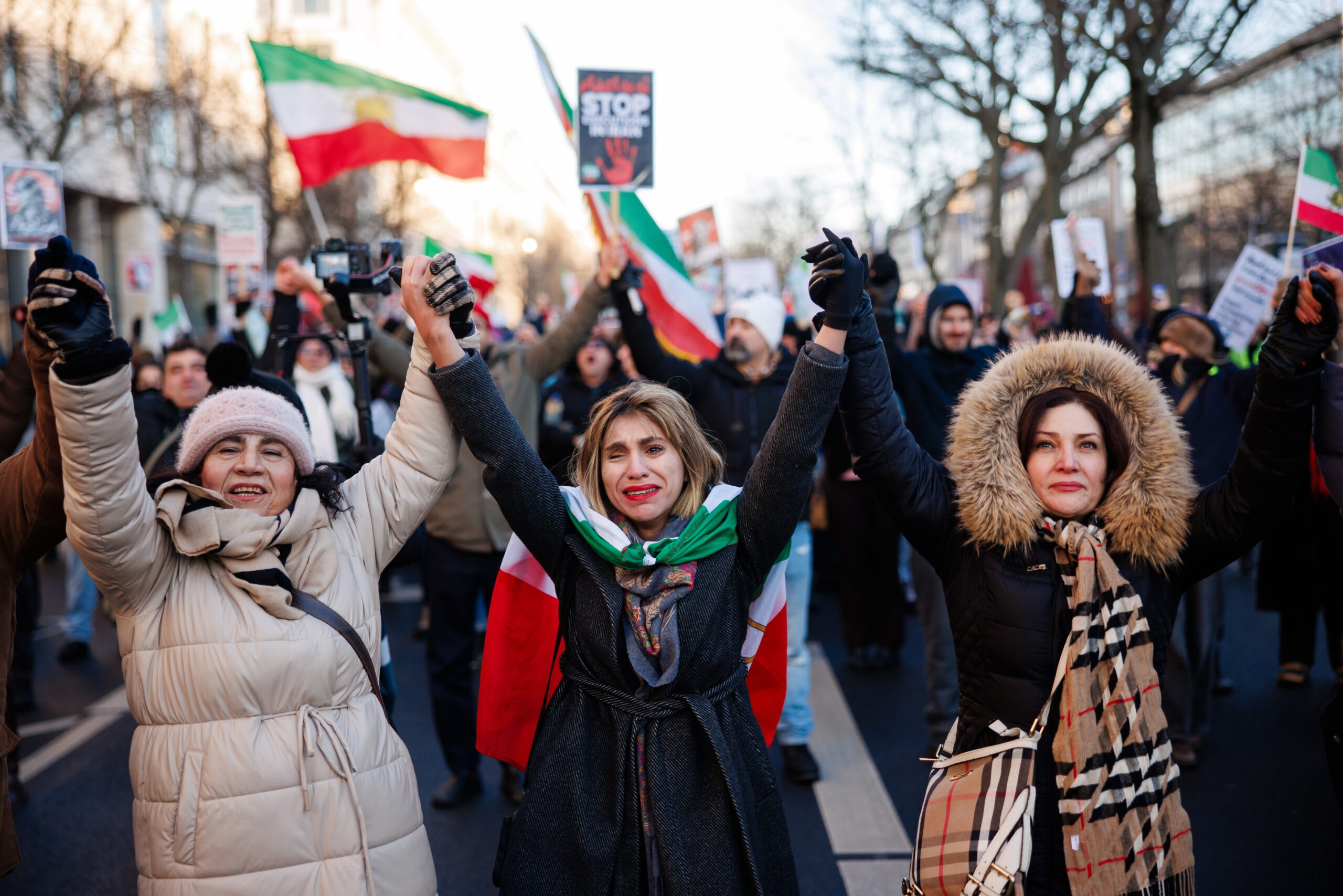
The number of killed and detained is difficult to determine due to the authorities’ imposing a near-total internet blackout. However, the Human Rights Activists News Agency (HRANA) confirmed the deaths of 544 people during the protests on 11 January 2026. It also reported that dozens of additional cases remain under review. More than 10,681 individuals are detained. Protests have taken place at 585 locations across 186 cities, spanning all 31 provinces of the country.
“The protests have gained momentum, and the number of protesters is increasing. Now is the time for the country’s leadership to halt their crackdown and implement President Masoud Pezeshkian’s pledge to listen to the grievances of ordinary people,” said Berit Lindeman, Secretary General. “Iran’s leadership should realise that rather than attacking peaceful civilian protesters, it is time for dialogue and democratic reforms.”
Pezeshkian was elected in 2024 and has publicly acknowledged the protesters’ grievances, stating that the government is prepared to engage with their concerns. However, he added that “the higher duty is not to allow a group of rioters to come and destroy the entire society.”
Even if Pezeshkian’s promise of dialogue was sincere, he is constrained by the strict stance of Supreme Leader Ali Khamenei and operates within the current system’s limitations.
“Denouncing protesters as rioters or tools of foreign powers will certainly not lead to a resolution of the current crisis,” said Gunnar M. Ekeløve-Slydal, Deputy Secretary General. “Only genuine reforms can do that. Also, the Supreme National Security Council must command the security forces to cease unlawful use of force and firearms.”
Human Rights Watch and Amnesty International have documented that security forces, including the Islamic Revolutionary Guard Corps (IRGC) and Iran’s police, have used “rifles, shotguns loaded with metal pellets, water cannons, tear gas, and beatings to disperse, intimidate and punish largely peaceful protesters.”
The UN Secretary-General, António Guterres, have reacted strongly to the reports of abuses, calling on Iranian authorities to exercise “maximum restraint and to refrain from unnecessary or disproportionate use of force”. He also called for steps to enable access to information, including restoring communications.
The precarious human rights situation in Iran before this wave of protests is well-documented. According to the Hengaw Organisation for Human Rights, 2025 was characterised by “escalation in executions, arbitrary arrests, systemic violence, and other grave human rights abuses across the country.”
According to another respected human rights organisation, Iran Human Rights, “the killing of protesters over the past three days, especially following the nationwide internet shutdown, may be even more extensive than we currently believe. The Islamic Republic is committing a major international crime against the people of Iran, and the international community is obligated, under international law, to use all available means to stop this crime.”
“Given the hardline character of the current regime, Norway and like-minded states must mobilise the full range of their tools and measures permitted under international law to exert pressure”, said Lindeman. “The United States and Israel, having pledged to support the protesters if attacked by the regime, must adhere to international law.”
The international community should:
- Urge Iranian authorities to cease unlawful killings, excessive force, mass arrests, and ensure the release of arbitrarily detained protesters.
- Urgently confront the internet blackout and violent repression, which are allowing serious crimes under international law.
- Demand access for independent monitors, journalists, and UN experts.
- Back independent international investigations into unlawful killings and excessive force, such as the UN Independent International Fact-Finding Mission on Iran.
- Preserve evidence for future prosecutions under international law.
- Impose targeted, human rights-based sanctions on individuals and entities responsible for serious violations.
- Apply universal jurisdiction laws to investigate and prosecute crimes such as extrajudicial executions and torture.
Background
The protests began on 28 December 2025, initially as economic demonstrations. The catalyst was a sharp collapse of the Iranian rial, which lost over 40% of its value in 2025, with the decline speeding up considerably after Iran’s 12-day war with Israel in June 2025, the 22 June 2025 US bombing of the country’s nuclear facilities, and the reimposition of international sanctions.
This led to high inflation, particularly in food and fuel, and merchants were unable to set prices for goods or restock imports. Additionally, subsidies were cut, access to foreign currency was restricted, and there were moves to reduce support for specific sectors. The first protests manifested as shop closures and strikes in Tehran’s Grand Bazaar, a historically sensitive and politically charged space in Iran.
Within days, demonstrations spread to all 31 provinces, extending beyond shopkeepers to students, workers, and urban poor, and shifting from economic slogans to anti-government and anti-theocracy chants, such as “death to the dictator,” “death to the Islamic Republic,” and criticism of Supreme Leader Ali Khamenei.
As in previous protests, the government responded by deploying police and security forces. Authorities declared that protesters could face charges such as “enemy of God,” which carries the death penalty. A near-total internet shutdown was enacted, international phone connections were severed, and journalists’ access was restricted.
Several factors contributed to the rapid escalation of the protests. Iran has not addressed grievances from the 2022–2023 “Woman, Life, Freedom” protests. Many networks, tactics, and grievances carried over into 2025–2026. New and intensified sanctions in September 2025, coupled with regional conflict, left Iran’s economy extremely vulnerable.
President Masoud Pezeshkian, elected in 2024 as a moderate reformist, took office in late July, but with limited authority. Ultimate power remains with the Supreme Leader and security institutions, reducing room for compromise.
President Pezeshkian has publicly stated that the government is willing to “listen” to protesters’ economic concerns, while simultaneously warning against “rioters,” blaming foreign actors (the US and Israel), and justifying security measures.
Protesters and opposition groups reject this framing, arguing that the protests are driven domestically, that violence is state-led, not the result of “terrorist elements,” and that the economic collapse reflects systemic governance failures.
Read our statement from 2023: Norway must strengthen its Iran policy