On the 21st of October, the Constitutional Court of Georgia began hearings on Georgian Dream’s lawsuit to ban and outlaw five major opposition groups in the country.
The stakes are high.
Even by the highly contested official count of the 2024 parliamentary elections, five parties passed the 5% threshold. Of these, one was Georgian Dream. The other four parties/blocks collectively secured approximately 38% of the vote. All four, along with another opposition party, are now in the dock.
Banning these parties would strip Georgia of the last appearance of political pluralism. It will also mark another major step by Georgian Dream towards pushing Georgia further away from its European future.
From adoption to Russian-style laws curbing civil society and independent media to the official halting of Georgia’s EU accession negotiations, Georgian Dream has, step by step, undermined and suffocated everything and everyone that could stand in its way.
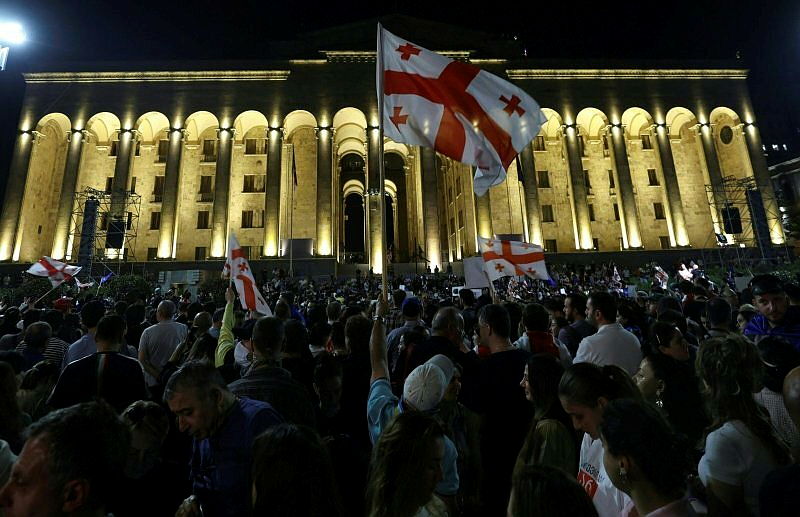
The protests that have taken place almost daily since November 2024 were met with violence, mass arrests, substantial fines, and increasingly restrictive rules. The GD has introduced a series of legislative measures affecting nongovernmental organisations, independent media, minorities, and rights groups.
Major political leaders have been arrested or otherwise targeted in the wake of the elections. The persecution has extended beyond politics, targeting doctors, artists, journalists, and just ordinary citizens deemed to be disloyal to the government.
In October 2025, Georgian Dream adopted legislation that prohibits individuals associated with banned parties from founding or joining political parties, holding public office, or standing for election. This will once again narrow opposition electoral lists and exclude political opponents from public life.
If the lawsuit against the political parties is approved, none of the major opposition parties could be left on the ballot by the 2028 parliamentary elections. In practice, Georgia will become a one-party state.
In its rhetoric, Georgian Dream points to bans on political parties elsewhere in Europe, which it often criticises. These comparisons are far from straightforward. Measures taken in Spain, Ukraine and Moldova have been justified on national security grounds, including concerns about ties to armed and illegal separatist groups or to a hostile Russia.
The European Court of Human Rights, whose jurisdiction Georgia has accepted, has emphasised in several cases that there can be no democracy without pluralism. Democracy depends on freedom of expression and association, making dissolution an exceptionally serious measure.
The case is moving quickly, leaving the opposition little room to act. The Court has rejected the majority of motions filed by the opposition, including a request to postpone the hearings.
Democracy cannot function without political pluralism, freedom of association and meaningful opposition. Excluding political opponents from democratic life risks further weakening Georgia’s democratic institutions, undermining checks and balances, and concentrating political power in the hands of one party and one man, Bidzina Ivanishvili.
Banning opposition voices will push the country further toward authoritarianism.
The European countries and institutions must stand with the Georgian people and call for these efforts to be abandoned. Fundamental freedoms and Georgia’s international human rights commitments must be respected. Political opposition, civil society groups and independent voices must be free to operate without fear of intimidation.