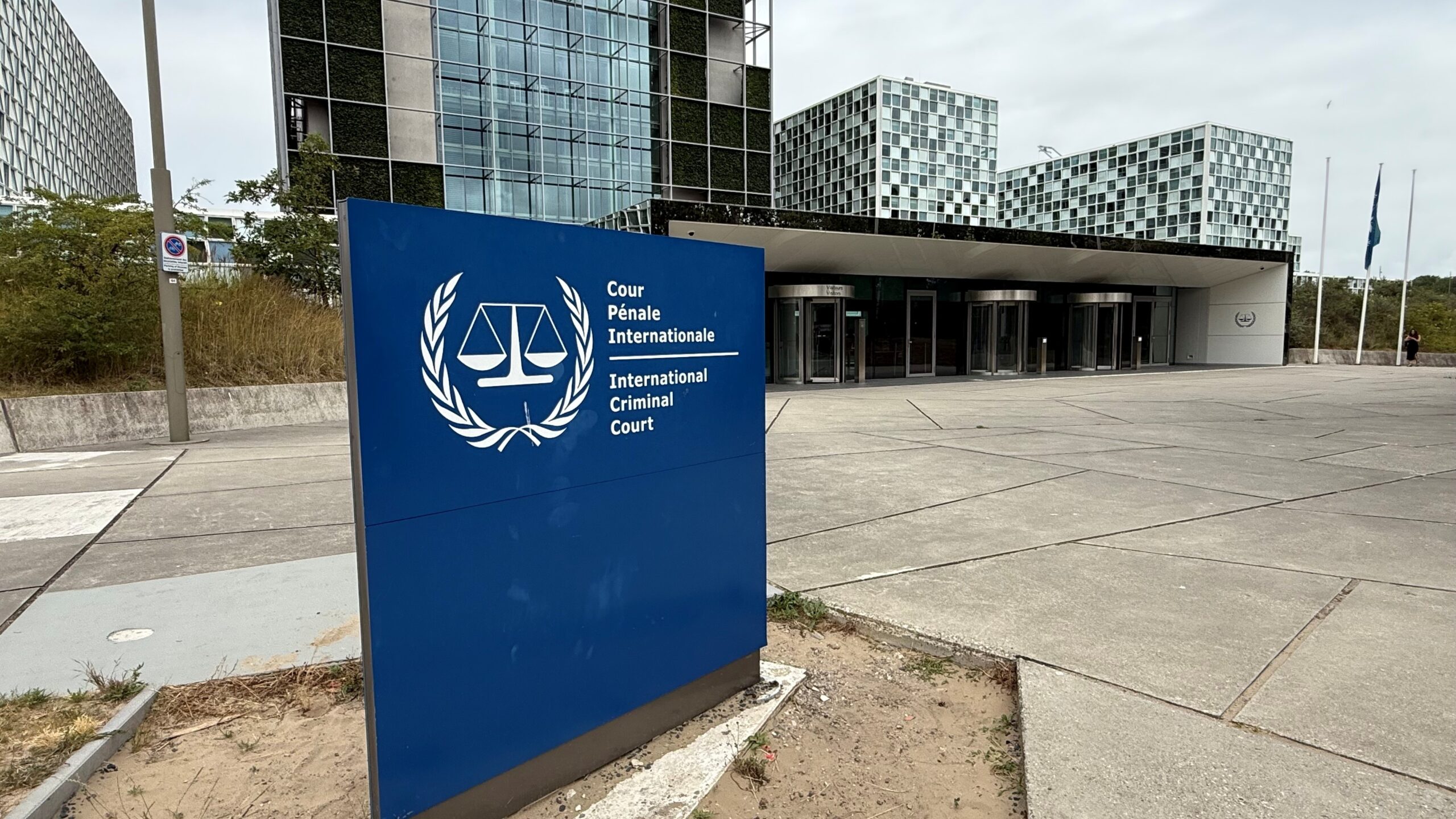
In 2029, States Parties to the Rome Statute will have another crucial opportunity to strengthen the jurisdiction of the International Criminal Court (ICC) over the crime of aggression. Following the failure to adopt the necessary amendments at the July 2025 Special Session, we respectfully call on all States Parties to seize this important occasion and work determinedly towards the adoption of the required Rome Statute amendment.
Particularly in times when imperialist politics and the use of force are gaining traction, the international community urgently needs a legal framework that can end impunity and effectively deter State leaderships from waging aggressive wars and other acts of aggression. To advance these goals, the ICC must be able to prosecute the crime of aggression under the same conditions that apply to the other three core international crimes. Recourse to aggression in recent years has painfully illustrated that this reform is crucial and long overdue.
The current legal framework for the prosecution of the crime of aggression is too limited and leads to glaring accountability gaps. The crime of aggression is a leadership crime, committed by those “in a position effectively to exercise control over or direct the political or military action of a State”. The ICC, as the international court with universal aspirations and thus particularly suited and legitimized to focus on the highest-ranking perpetrators, should be enabled to effectively end impunity for “the most serious crimes of concern to the international community as a whole”. However, due to the restrictive jurisdictional regime implemented for the crime of aggression in Art. 15bis Rome Statute, the ICC is currently precluded from doing so in most instances.
For the other three core crimes, in cases of proprio motu investigations or State Party referrals, Art. 12 Rome Statute provides for ICC jurisdiction where the crime is committed on the territory, or by a national, of a State Party or a State lodging an ad hoc acceptance of jurisdiction. This also covers crimes committed by non-State Party nationals if committed on the territory of a State Party. By contrast, concerning the crime of aggression, the ICC cannot exercise its jurisdiction if the crime is committed by non-State Party nationals or on the territory of non-States Parties (Art. 15bis (5)), except if the Security Council refers the situation to the Court (Art.15ter). This holds true independently of whether it is a State Party that is being attacked by a non-State Party. Moreover, States Parties have the option to declare that they do not accept jurisdiction (Art. 15bis (4)). While the UN Security Council remains competent to refer situations (Art. 15ter), its veto structure poses a persistent risk of deadlock where proposed referrals implicate permanent members or their allies due to the possible use of the veto power. The current legal framework thus leaves it to the most powerful States (under Art. 15ter) to decide whether leaders excluded from the Court’s jurisdiction under Art. 15bis may be held accountable for the crime of aggression.
States Parties must prioritize remedying this dire situation. This is not only crucial to discourage State leaders from waging aggressive wars and committing other acts of aggression against other States, but also to provide another layer of protection for States at risk of becoming victims of aggression. Only an amendment of the Rome Statute’s jurisdiction over the crime of aggression can help ensure that States Parties are better protected against the commission of that crime and that the ICC is able to ensure accountability for such violations.
The amendment is also crucial to hold accountable those responsible for causing immense suffering to entire populations, including soldiers on all sides, as well as civilians subjected to attacks, not all of which can be prosecuted as war crimes but are part of the aggression. Finally, as a matter of consistency and legitimacy of the international justice system, its framework must ensure accountability not only in a few instances, but with the aspiration to uphold the prohibition of the crime of aggression as universally as possible, without selectivity and double standards.
By resolution adopted in Kampala in 2010 (RC/Res.6(4)), States Parties mandated a review of the crime of aggression to take place seven years after the beginning of the ICC’s exercise of jurisdiction over the crime (in 2018), which thus became due in 2025. In advance of the July 2025 session, a cross-regional group of States submitted an amendment proposal to harmonize the Court’s jurisdiction. While consensus on the adoption of the amendments was not reached, States Parties decided by resolution (ICC-ASP/S-1/Res.1(2)) to convene another Special Session in 2029 to consider the submitted amendment proposal, to hold an intersessional meeting in 2027, and to establish a dedicated subgroup of the Working Group on Amendments to take this process forward.
In preparation for the Special Session in 2029, we call for a transparent and inclusive process appropriate to achieve harmonization of the Court’s jurisdiction over the four core crimes. We welcome the Assembly of States Parties’ commitment to strengthening the Court’s jurisdiction over the crime of aggression and urge States parties to finally seize the opportunity to close accountability gaps.
Against this background, we call on States Parties to
– Take the steps necessary towards an amendment to harmonize the ICC’s jurisdiction over the crime of aggression. States Parties should use the 2029 Special Session to amend Article 15bis of the Rome Statute to bring the conditions for the exercise of jurisdiction over the crime of aggression in line with the other Rome Statute crimes, thus closing the existing accountability gap.
– Reaffirm their commitments to uphold the prohibition of the use of force. States Parties should further uphold and honor their obligations under international law by refraining from committing acts of aggression, by protecting their populations from such acts committed by others, including through enhanced legal protection, and by clearly denouncing violations of the prohibition of the use of force by other States.
– Strengthen and defend the integrity of the ICC. In the face of growing political pressure aimed at undermining international justice institutions, and the ICC in particular, States Parties must recommit to the ICC’s independent mandate and provide it with the political and financial support it needs to fulfill its mandate, including through an amendment to strengthen its jurisdiction over the crime of aggression.
– Ensure inclusive preparatory and negotiation processes. Deliberations and eventual negotiations around jurisdictional reform must be led across regional borders in the spirit of inclusivity and respect.
– Guarantee the meaningful participation of civil society and survivors. The perspectives of civil society organizations and those directly affected by acts of aggression are crucial for a legitimate and effective process. States Parties should commit to providing access and opportunities for their meaningful engagement at every stage.
– Maintain transparency throughout the processes. States Parties should ensure discussions remain accessible, with a sense of accountability, including through regular reporting and the provision of relevant documentation to all stakeholders.
Supported by:
– A world without chemical and biological weapons-www
– Action des Chrétiens Activistes des Droits de l’Homme à Shabunda (ACADHOSHA)
– Asociación española para el derecho internacional de los derechos humanos, AEDIDH
– Center for Clean and Green Governance (CCGG)
– Center for Truth and Justice
– Colombes de la Nature / CDN
– Democracy Today
– Eesti ÜRO Ühing
– European Center for Constitutional and Human Rights (ECCHR)
– Global Initiative against Impunity (GIAI)
– Global Justice Intelligence Eyes, Inc.
– Human Rights Centre ZMINA
– ImPact Coalition on Strengthening International Judicial Institutions
– International Commission of Jurists, Norwegian Section (ICJ Norway)
– International Community for Georgia Development and the Progress
– International Service for Human Rights
– Iranian Center for International Criminal Law
– Keen and Care Initiative (KCI)
– Kenya Human Rights Commission
– Kurdish organizations Network coalition for the International Criminal court (KONCICC)
– Kurdistan organizations Network to Abolish Nuclear and Mass Destruction Weapons-KNOW
– Kurdistan without Genocide
– Lawyers Committee on Nuclear Policy
– Legal Defence & Assistance Project (LEDAP)
– Life campaign to abolish the death sentence in Kurdistan Network
– LIGUE POUR LA PAIX, LES DROITS DE L’HOMME ET LA JUSTICE (LIPADHOJ)
– Nonviolence International
– Norwegian Helsinki Committee
– Organization Against Weapons of Mass Destruction in Kurdistan
– Organization of the Justice Campaign- OJC
– Platform for Peace and Humanity
– RAWSA Alliance for African and Arab States
– RootsAction
– StoptheDrugWar.org
– Students for Global Democracy Uganda
– Synergy for Justice
– The Global Institute for the Prevention of Aggression
– The Siracusa International Institute for Criminal Justice and Human Rights
– Trial International
– World BEYOND War
– Youth Compassion for Humanity Uganda
– Youth For Peace And Dialogue between Cultures