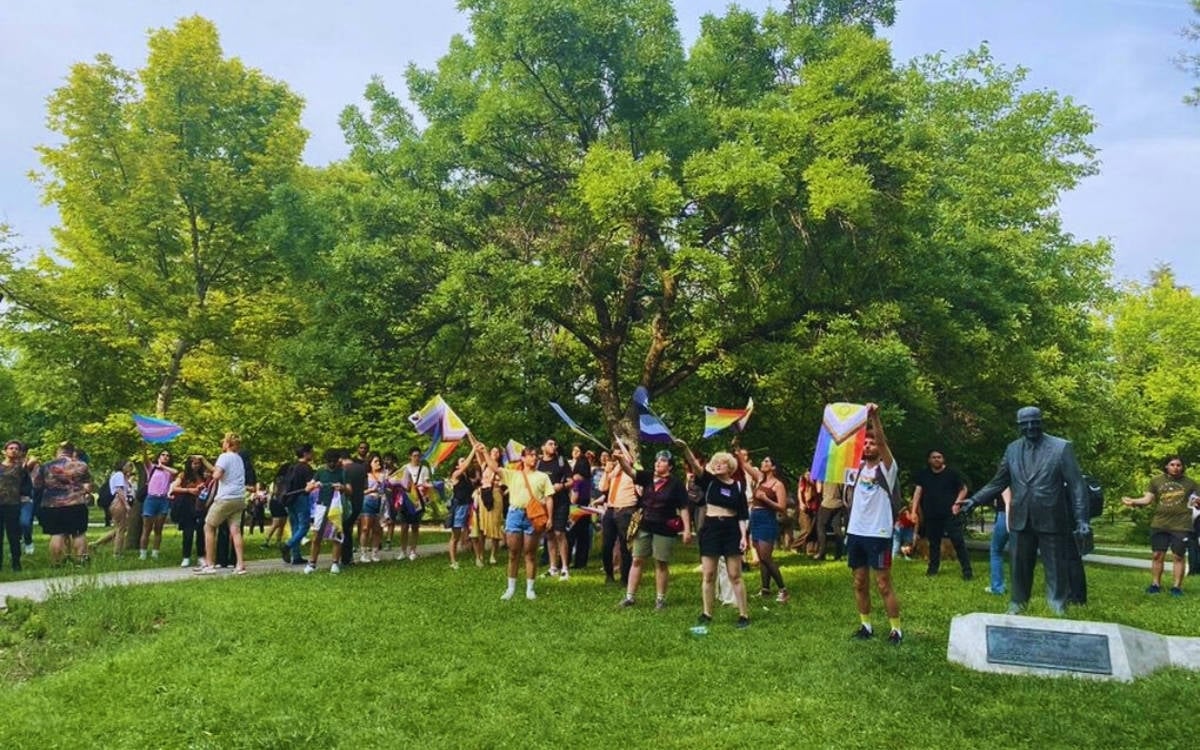
On 22 September, a hearing will take place in Ankara, in a criminal case concerning student LGBTI+ rights defenders who took part in a Pride event at Middle East Technical University (METU) in 2022.
What happened in 2022?
In 2022, the METU campus was placed under heavy police presence in the early hours of the day in response to an attempt to hold a Pride March after a two-year hiatus, according to Pirha News Agency. Many police officers were deployed across the campus several hours before the scheduled time of the march. Following METU Rectorate’s announcement that the Pride March would “not be permitted to take place,” numerous METU alumni were also denied entry to the campus.
According to the defendants, the police intervened without a prior order or warning to disperse the gathering and used harsh and disproportionate force.
The defendants have also made serious allegations concerning their treatment during detention, including physical violence and beatings, threats and insults, degrading treatment, and threats of sexual violence.
These allegations are grave and require effective, independent and impartial investigation. Any allegation of ill-treatment by law enforcement must be examined promptly and impartially, with appropriate accountability where wrongdoing is established.
Court finds ban unlawful
METU students challenged the Rectorate’s decision to ban the Pride March before the administrative court. The court’s unanimous decision, issued on 30 January 2023, was served on the parties on 27 February 2023, Unikuir reports.
In the proceedings before the Ankara 8th Administrative Court, the court emphasised that the right to peaceful assembly and demonstration is one of the indispensable rights in a democratic society.
The court found that the Rectorate’s purported intelligence, on the basis of which it had written to the Ankara Governor’s Office seeking to take steps aimed at treating the march as a criminal matter, was “abstract” and unsubstantiated. Moreover, the court held that, if there were genuine security concerns, the Governor’s Office should fulfil its responsibility by taking the necessary police measures and precautions, rather than by banning events and assemblies that constitute constitutionally protected rights.
Three years of uncertainty
The events and detentions took place in 2022, while the criminal proceedings were initiated approximately three years later. The 37 students were detained in 2022 and released after giving statements at the police station. In 2025 they were accused of “participating in an unlawful demonstration and failing to disperse despite a warning to do so.” This delay is widely viewed as a form of judicial harassment.
They have also reported alleged irregularities in notifying their families and alleged attempts to stigmatise them through references to purported links with terrorist organisations.
Whether or not these allegations are ultimately substantiated, the prolonged uncertainty associated with criminal proceedings can place significant pressure on individuals exercising their fundamental rights. For human rights defenders in particular, such pressure can contribute to a chilling effect, discouraging others from participating in peaceful demonstrations or publicly defending human rights.
The principle of confidentiality in criminal investigations is equally important. When information concerning investigations is disclosed or used by public authorities in ways that stigmatise individuals before a case has been determined, it can seriously undermine the presumption of innocence and an individual’s right not to be stigmatised. Such practices can also erode public confidence in the criminal justice system.
This is about everyone’s right to protest
The METU Pride case is not simply about one demonstration in 2022. It raises a broader question: can student LGBTI+ rights defenders exercise their right to peaceful assembly without facing violence, intimidation or disproportionate use of force?
The right to peaceful assembly is a fundamental component of an open and democratic society and protected under international human rights treaties to which Türkiye is also a party. It protects not only popular or uncontroversial demonstrations, but also peaceful expression by groups whose views or identities may be contested or unpopular.
When peaceful protesters are subjected to excessive force, intimidation or disproportionate legal pressure, the consequences extend beyond those directly involved. Civic space becomes smaller for everyone and democracy suffers.
The upcoming hearing therefore deserves close attention. It is an opportunity to assess not only the individual circumstances of the defendants, but also the wider protection afforded to peaceful assembly and human rights defenders.