Ukraine
Leaving the large city of Chernihiv, in northern Ukraine, for a small village, 25-year-old Mykyta Buzinov thought he would be safe. For the first few days, he and his family stayed in the quiet village of Mykhailo-Kotsiubynske, 20 kilometres from the city. But the peace did not last long. Russian forces reached the village too and occupied it. When the Ukrainian military destroyed several enemy columns, the occupiers began abducting civilians, looking for those who could communicate with the Ukrainian military.
Mykyta did not believe he was a target because he was an ordinary driver with no connection to the army. However, on March 4, 2022, Russian soldiers came to his family’s home.
They took the whole family, his mother, uncle, brother and fiancée outside and confiscated their phones. Then the horror began.
Mykyta was stripped naked to check for tattoos and marks from weapons on his body. The Russians pointed machine guns at him and his brother. The soldiers shouted that they had found maps on his brother’s phone. They also accused Mykyta of allegedly transmitting information. To intimidate the family, the Russians even staged a mock execution: they took Mykyta behind a barn and started shooting.

His mother went through hell because she did not know whether her son was alive.
His fiancée, Kateryna, was forced to kneel beside him while the soldiers pointed a gun at her and threatened to kill Mykyta in front of her.
The soldiers left but took Mykyta with them, leaving his family without any idea where he was.
His mother hoped that he would return the next day, but time passed, and there was no news of her son.
After the village was liberated, the family learned that another resident abducted the same day had been tortured and shot in the head, so they feared Mykyta had suffered the same fate. His mother gave DNA samples, but months passed without any match, showing that Mykyta was not among the identified dead. Nine months after his abduction, the family heard that he might be imprisoned in Belgorod, Russia, but a lawyer was told that he was not there. Later, the family received another message saying that a man with a similar name had been “released” from a local prison.
His family continues to hope that he is alive and in Russian custody, waiting for the day he can return home.
Tajikistan
Maksud Ibragimov was born in Tajikistan in 1977 before emigrating to the Russian Federation in 2004 alongside millions of fellow Tajik migrant workers. In October 2014, after a decade in Russia, he founded the exiled opposition movement “Youth for the Revival of Tajikistan” to fight corruption and organize protests against Tajik authorities. Tajikistan quickly outlawed the movement and requested his extradition, leading Russian police to detain him on October 9, 2014. Because Ibragimov had renounced his Tajik citizenship to become a Russian national, a Russian court rejected the extradition request and released him two days later.
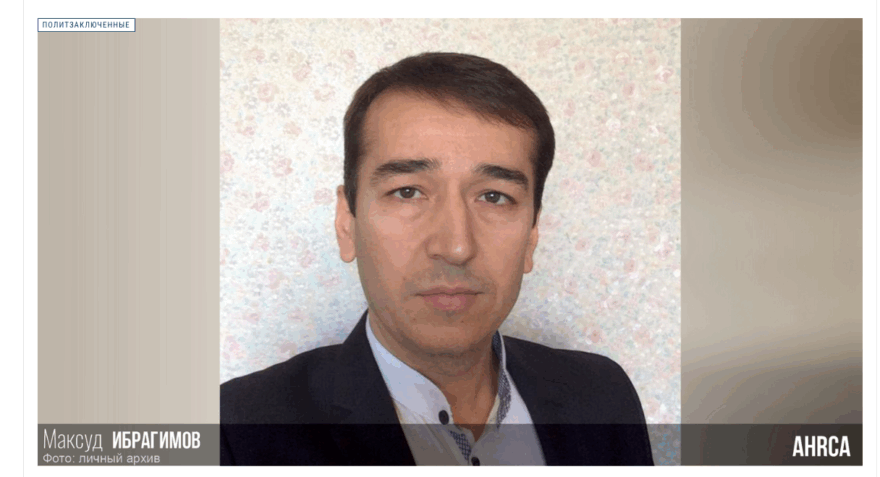
Over the following months, Ibragimov received constant threats, culminating in a November 2014 Moscow street attack that left him with six stab wounds. On January 20, 2015, Russian authorities summoned him to a police station, revoked his Russian citizenship to render him stateless, and brought him before prosecutors alongside Tajik officials. The prosecutor ordered his release, but Ibragimov was immediately kidnapped off the street by Tajik operatives, handcuffed, and forced into the cargo section of a plane bound for Tajikistan. His relatives were kept entirely in the dark until he resurfaced in Tajik custody without prior access to legal counsel or formal charges.
Tajik authorities held him incommunicado for ten days, subjecting him to severe torture to force a public confession that he had returned voluntarily. Following a deeply flawed trial six months later, he was sentenced to 17 years in prison on political extremism charges. The United Nations Working Group on Arbitrary Detention later classified his initial abduction as an enforced disappearance and ruled his imprisonment arbitrary, concluding it stemmed directly from his peaceful political expression.
Chechnya
On 28 August 2006, 40-year-old Aslan Mishiev from Samashki went missing.
He left his home after 1 p.m. to check on his sheep near a wooded area on the eastern edge of the village. Local residents reported that Russian security forces were located nearby on that day.
Later, local children reported seeing armed men arrive in military and armoured vehicles near the Sunzha River. The armed men drove the children away from the area. The children also observed armed personnel surrounding a man dressed in light-colored civilian clothes.
Mishiev’s relatives believe this man was Aslan, who had been wearing a light-coloured shirt that day.
He had also left without his passport. The possibility that he drowned was ruled out because the river’s water level was low.
The following day, his relatives reported his disappearance to the district prosecutor’s office and the police. They also appealed to a member of parliament and organised a protest outside the district administration.
On 7 September 2006, prosecutors opened a criminal investigation into his suspected murder.
However, the child witnesses later withdrew their statements, allegedly under pressure.
The family criticised the authorities for failing to make sufficient efforts to identify those responsible.
Despite searching prisons, contacting officials and human rights organisations, the family has never discovered what happened to Aslan.
Türkiye
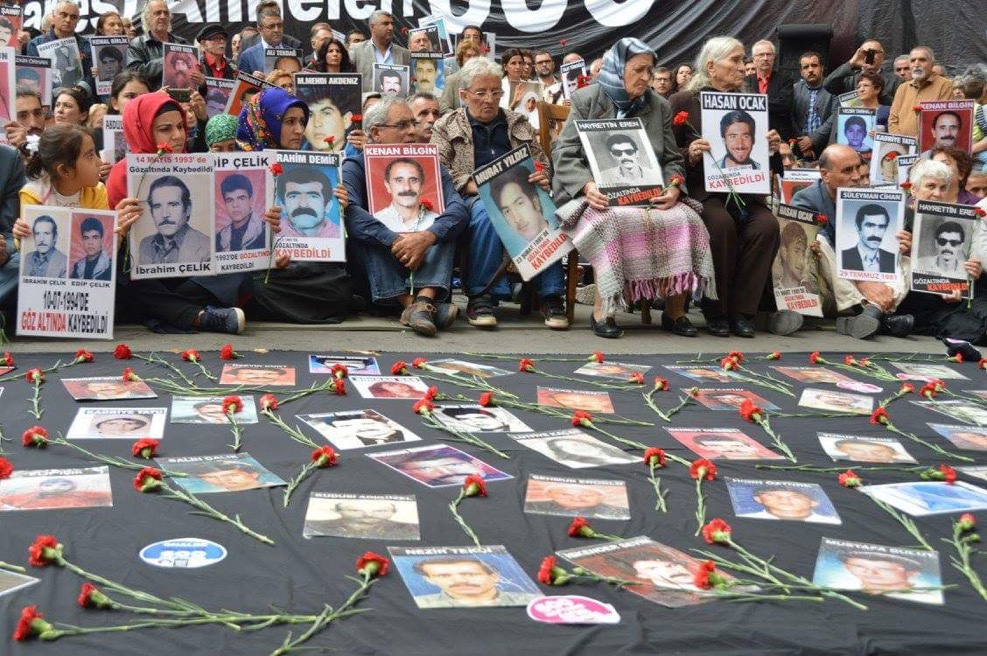
Since 27 May 1995, the Saturday Mothers/People have gathered every Saturday at Istanbul’s Galatasaray Square to seek answers about relatives who were forcibly disappeared in police custody or killed in unidentified political murders, and to demand accountability. What began with families searching for their loved ones amid the surge in enforced disappearances in Türkiye during the 1990s grew into a nationwide human rights movement challenging a culture of impunity. By holding photographs of the disappeared, telling their stories and keeping their names in public memory, the Saturday Mothers/People have transformed one of Türkiye’s busiest public spaces into a place of remembrance and resistance.
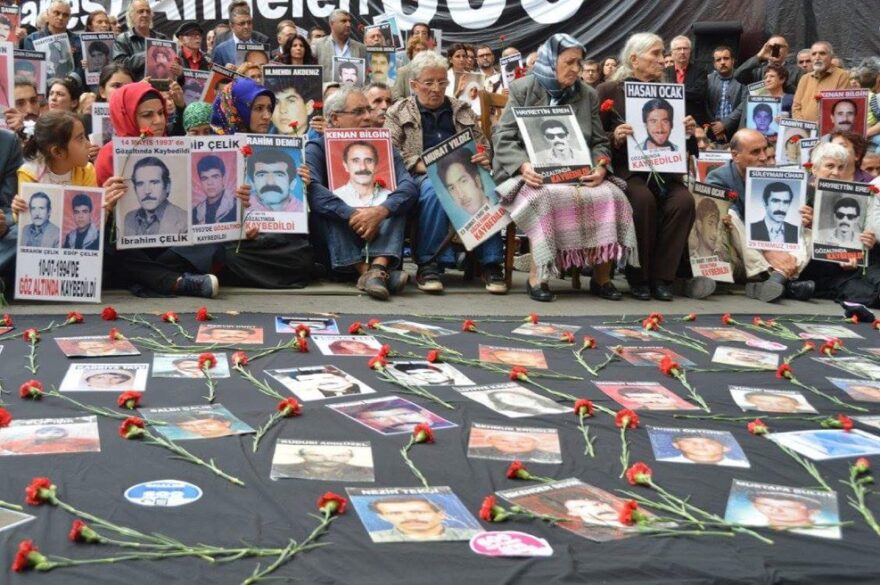
Their gatherings have repeatedly been met with police violence, detention and restrictions, yet they have continued. One of the most striking examples of these restrictions came after their 700th gathering, when they were prevented from meeting at Galatasaray Square for 300 weeks. Despite Constitutional Court judgments finding violations of their rights, the barriers remained until their 1,000th week.
More than 1,100 weeks later, their demand for truth and justice remains unanswered in many cases. Many of the enforced disappearances and unsolved killings took place during the height of the armed Kurdish conflict in the 1990s, particularly in southeastern Türkiye. As Türkiye enters a new phase of its “peace process” regarding Kurdish conflict, addressing the legacy of enforced disappearances and other grave human rights violations is essential to building a lasting peace. For many those affected, confronting the past means establishing truth, holding those responsible accountable, ensuring justice and preventing such violations from being repeated. These demands also require a strong legal and institutional commitments. Yet the authorities remain far from addressing the essential protections and remedies and Türkiye’s legal framework still falls short of providing the safeguards needed. Türkiye has still not even ratified the International Convention for the Protection of All Persons from Enforced Disappearance, adopted by the United Nations in 2006.
Documentation and Accountability Hub
Enforced disappearances are prohibited under international law and constitute serious violations of rights.
These include great threats to the right to life; the right to freedom from torture or cruel, inhuman, or degrading treatment; the right to liberty and security; the right to recognition as a person before the law; and the right of all detained people to be treated with humanity.
Our Documentation and Accountability Hub have documented thousands of these cases – fathers, daughters, brothers, grandmothers and other loved ones.
We provide these documents for institutions and governments who wants to punish the perpetrators of these crimes.
THIS 30 AUGUST, WE REMEMBER.
And we call for the disappeared to be investigated and their families to be heard.
No lasting peace without truth.
No justice without accountability.
Contact us
Employee