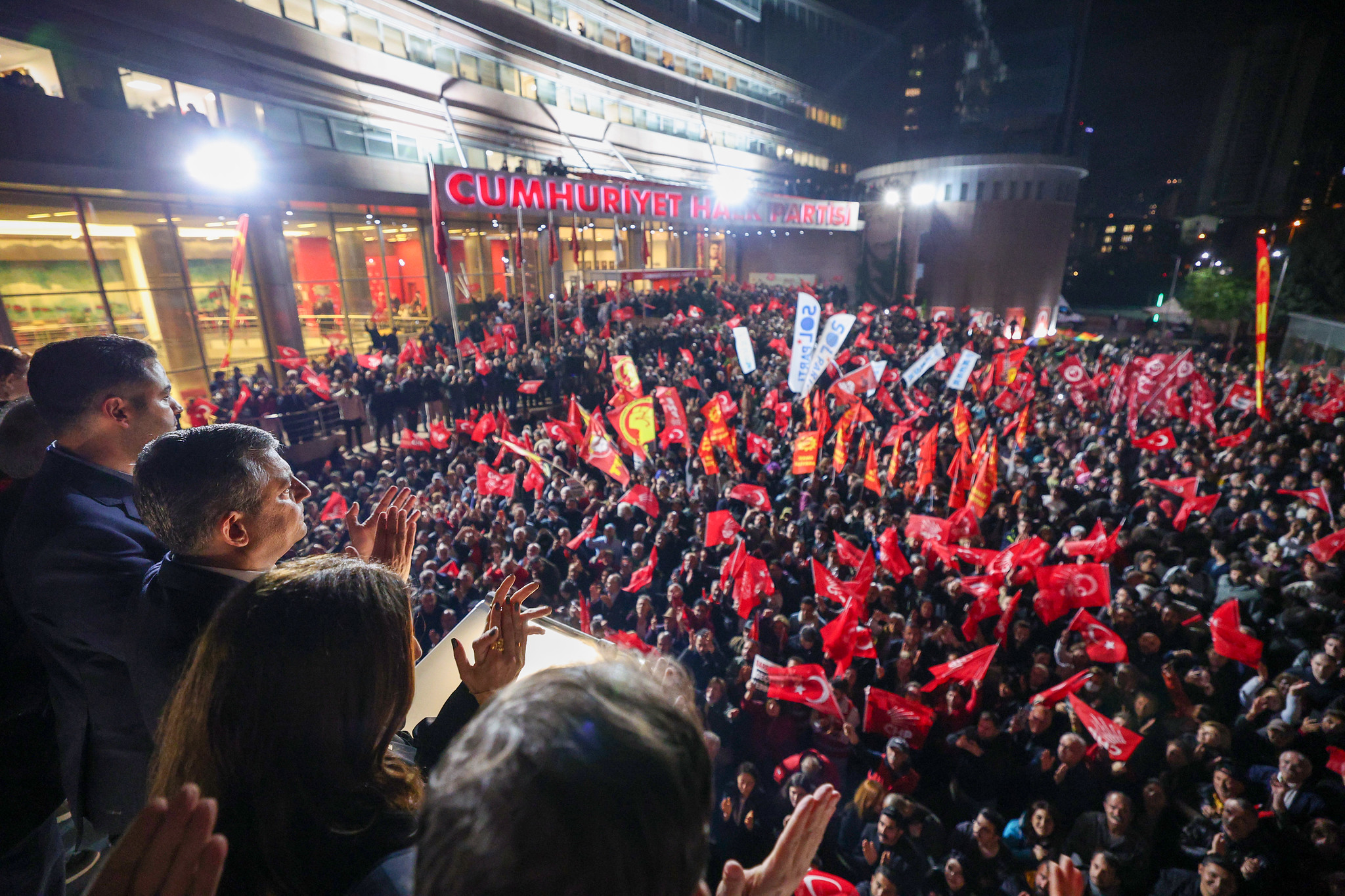
On 21 May 2026, the 36th Civil Chamber of the Ankara Regional Court of Appeals ruled that the CHP’s 38th Ordinary Congress (2023) and 21st Extraordinary Congress (2025) were null and void, declaring them “absolutely invalid”. The court also issued an injunction ordering the removal of the current leadership, including CHP leader Özgür Özel and the Party Central Executive Board. It further reinstated Kemal Kılıçdaroğlu, the CHP’s former leader, and the members of the CHP’s previous Central Executive Board. Consequently, all political activities carried out by the CHP since 4 November 2023 are deemed null and void.
The Court held that irregularities affected the integrity of CHP’s 2023 leadership election, including corruption in the leadership election process and violations of the voting and delegate procedures. Under Turkish Civil Law, such defects in general assemblies of associations – if deemed serious enough – can justify “absolute nullity” (‘butlan’), meaning the act is treated as never having legally taken place.
However, legal experts argue that, under the Constitution and the Political Parties Law, political parties are distinct from associations and are subject to specific legislation. The authority to supervise congress or convention processes lies with the Supreme Election Council (YSK) and the election boards. Civil courts of first instance and regional appellate courts, therefore, have no authority to issue decisions in this matter. A regional court’s assessment constitutes a clear violation of the judicial hierarchy and the constitutional division of powers.
Furthermore, independent observers dispute the Court’s decision, arguing that the allegations were unproven and politically motivated. Even if there had been irregularities, the Court’s intervention was disproportionate and interfered with political party autonomy. Similar claims had earlier been dismissed by a lower court, only to be revived on appeal without new evidence.
CHP leader Özgür Özel called the ruling a “judicial coup” and vowed to resist, starting with refusing to leave the CHP headquarters in Ankara and holding rallies. On Sunday, 24 May, police forcibly entered the headquarters, using pepper spray inside the building, and forced Özel and the team out. Further police intervention was reported before Özel’s meeting on 26 May in İzmir, including the use of high-pressure water spray against demonstrators.
In a joint statement released by 15 bar associations, it was stated that “according to the Constitution and the Political Parties Law, the authority to decide on the legality of a political party’s congress rests with the election boards and the Supreme Election Board. The decision in question is clearly unlawful.” Furthermore, the injunction to remove the current leadership and reinstate it before the 2023 Congress is unlawful, as the ruling remains subject to appeal.
While many observers view this development as an attempt to shape politics through the judiciary, Türkiye’s Minister of Justice stated that the Regional Court of Appeals decision “strengthened confidence in democracy”. Türkiye has a long history of political party closures through court judgments – especially of Kurdish and religious parties – but this chaotic intervention in the biggest challenger to Erdoğan has wider implications.
The majority of opposition parties expressed solidarity with the CHP and raised concerns regarding the ruling. The DEM (People’s Equality and Democracy Party) Party, for example, stated that the decision declaring the congress “absolutely invalid” was “incompatible with justice and the rule of law” and described it as “an attempt to redesign politics through the judiciary.”
The European Union External Action made a statement on 22 May, remarking that “as an EU candidate country and a long-standing member of the Council of Europe, Türkiye is expected to uphold the highest democratic standards and practices.” Given the court ruling on CHP’s congresses along with the removal of elected officials, such as Istanbul Greater City Municipality Mayor Ekrem İmamoğlu, the statement raised concerns “about the rule of law, fundamental rights, democratic pluralism and the independence of the judiciary”.
Considering the broader decline in Türkiye’s human rights protections and the restrictions on civic space, this development fits within a broader pattern of legal and political pressures, including ongoing proceedings targeting opposition figures and municipalities, such as those involving Ekrem İmamoğlu and other CHP-led local administrations.
Multilateral political actors and international human rights mechanisms must engage with these alarming developments and call on Türkiye to protect human rights, uphold the right to hold peaceful demonstrations, and safeguard the democratic space in the country.